By Andy Rich
After carefully removing fossils from the field and transporting them to the museum, we have plenty of lab work to do. Fossil preparation, or prep for short, involves all the steps required to make sure fossils can be researched and/or displayed. Prep involves, but is not limited to, removing excess rock from the fossil and using glues and other materials to repair the fossil.
Prep is a long process that requires even more patience and focus than field work. There is a rough time conversion for how much work a specimen will require in the lab. Every hour of field work translates to roughly 6-12 hours of lab work. If the fossils are super fragile, like eggs, this number can be closer to 20 hours of lab work. This is to avoid damaging the fossils in ways that cannot be repaired.
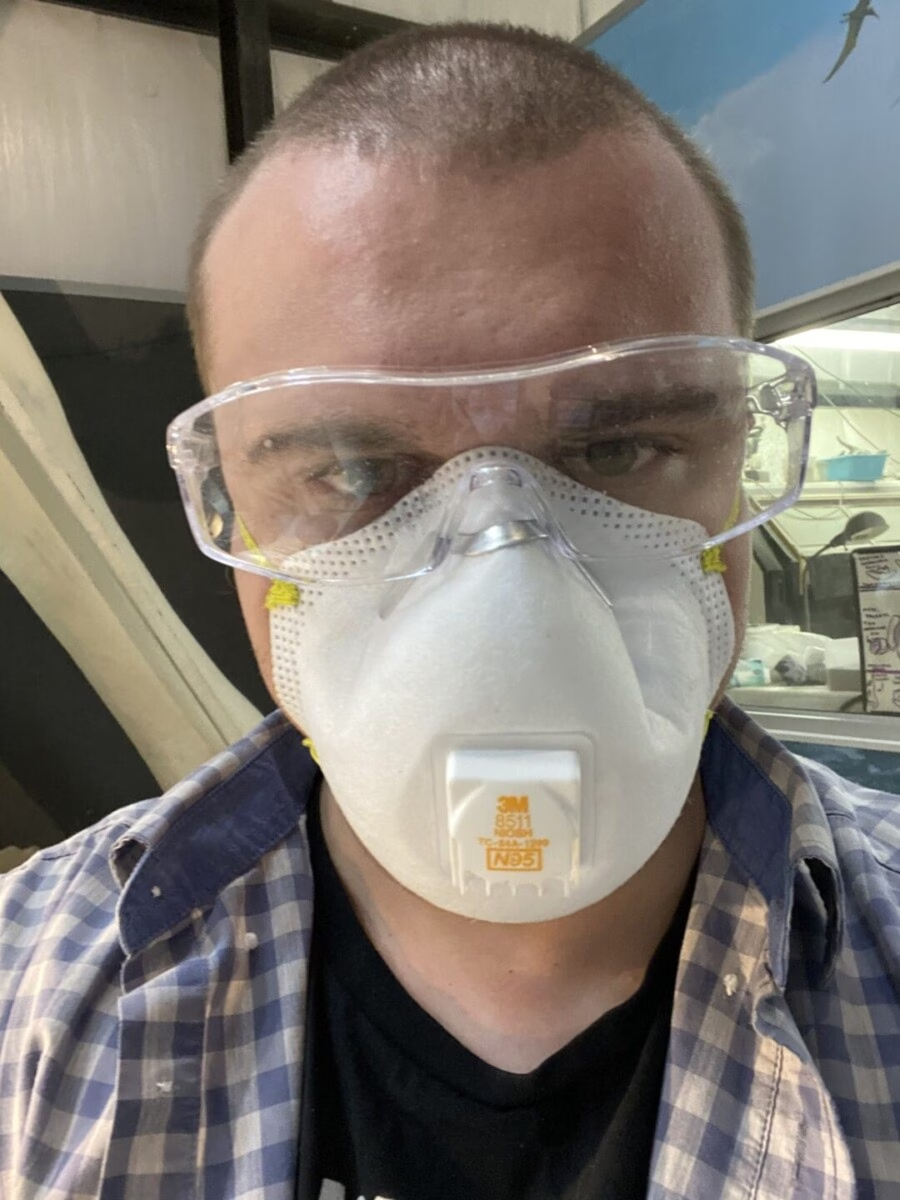
First, we must remove the excess rock. We call this the matrix. Matrix is brought back to protect the fossils during transportation. Additionally, it is safer to remove in a lab setting than in the field. Paleontologists use a wide range of tools, depending on what is best suited for the job at hand. Air scribes use pressurized air to break away rock. While dental picks can peel rock off from fossils more delicately.
Once an appropriate amount of matrix is removed, which will vary by specimen, we can begin using different glues to keep fossil fragments together. Additionally, thinner glues are used to coat fossils to keep them durable.
Now we store our fossils in our collections. This is a safe area with monitored conditions. Excess moisture, temperature shifts, and more can damage fossils so they are all monitored and regulated. Once cataloged and safely stored, fossils can be accessed for the next step of the process, research and education.